Glass and Hardstone
5 objects
Things made by working a material while it is hot, or by cutting one that never was. The two sit together here because both are read the same way in the hand: against the light, for what the wall of the vessel does to it.
Two materials, one way of looking. Hot glass is gathered on the end of a pipe and worked against time; the maker has the length of a cooling to decide what the piece will be, and every decision after that shows. Hardstone is the opposite trade. The block was formed before anyone alive had a claim on it, and the cutter takes away until the vein runs where the design wants it, or abandons the block.
What puts them in one section is the wall. Both are read by holding the vessel up: a blown wall thin enough to tint the light behind it, a cut wall thick enough to carry the light into the stone and give it back. The plates are lit for that. Nothing here is photographed against black, because a dark ground flatters glass and lies about how thick it is.
The section opens with the Venetian pair and closes with the cut stone, which is roughly the order of difficulty and exactly the order of patience.
Narrow by term or decade
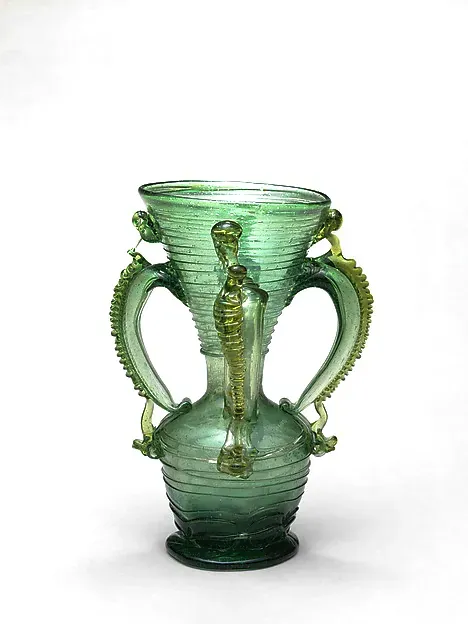
Glass · 17th–18th century · 01-01
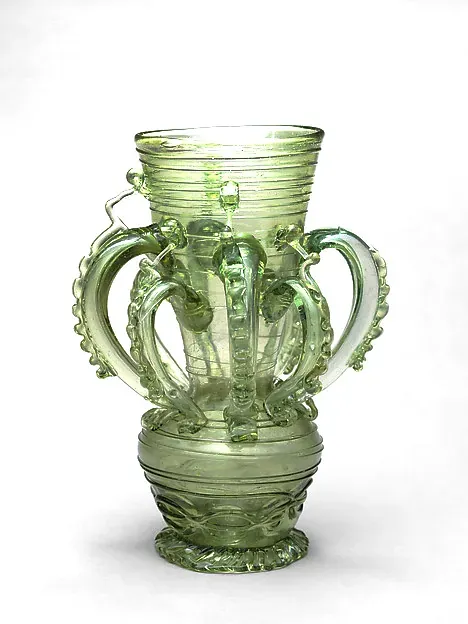
Glass · 17th century · 91.1.1222
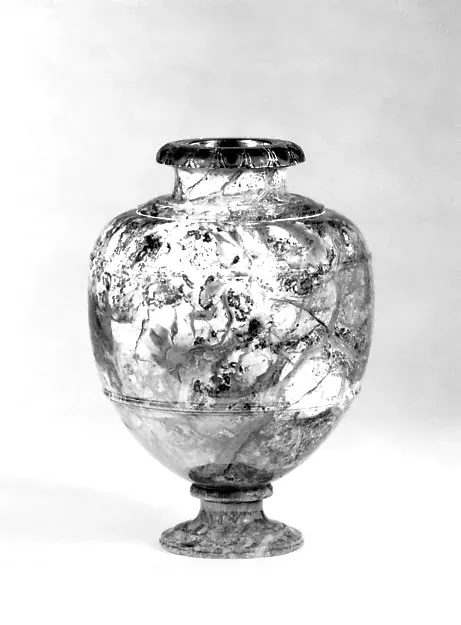
Jasper, silver gilt · mid-17th century · 17.190.597
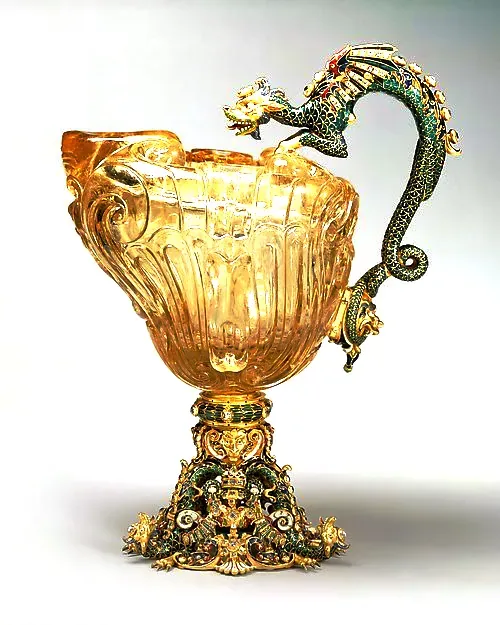
Smoky rock crystal, enamel, gold, diamonds · ca. 1680 and early 19th century · 01-04
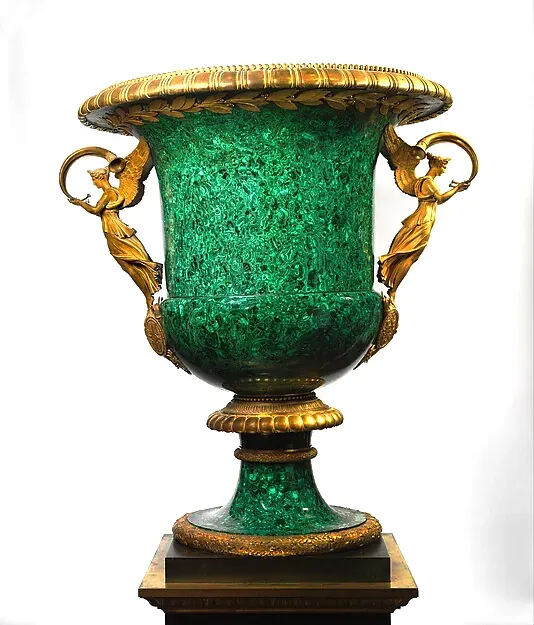
Russian malachite, gilt-bronze mounts, bronze pedestal · 1819 · 01-05